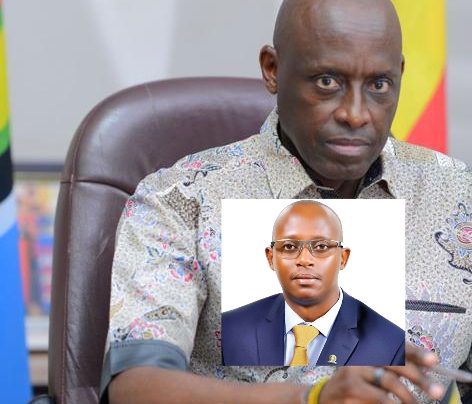
By Mr. Taremwa Barnabas Bwaniaga, influential commercial farmer/rancher, businessman, Gen Salim Saleh’s brother-in-law, 5th July 2026. The Proposed Extradition of Mr. Michael Mpeirwe Katungi to the United States is fraud!
This brief highlights serious legal and constitutional concerns surrounding the request by the United States of America to extradite Mr. Michael Mpeirwe Katungi, a Ugandan citizen.
The United States has charged him with offences relating to narcotics trafficking, firearms, and alleged support to an organization it has designated as a terrorist group.
Mr. Katungi has already filed Constitutional Petition No. 0014 of 2026 challenging the legality of the extradition process. Until those constitutional issues are resolved, there is a real risk that Uganda could violate its own Constitution by continuing with the extradition.
The purpose of this brief is to draw the attention of the Executive to these concerns and recommend practical steps to protect Uganda’s Constitution, its institutions, and the rights of its citizens.
1. Serious Questions About the Legal Process. Several government institutions may have acted outside the powers given to them by law.
The Director of Public Prosecutions (DPP)
The law gives responsibility for beginning extradition proceedings to the Minister responsible for Justice, not the Director of Public Prosecutions.
However, the DPP instructed the police to arrest Mr. Katungi before the proper legal process had been followed. This raises concerns that the arrest may not have been carried out under the correct legal authority. Recommendation: Future extradition matters should only be handled by the legally authorized office. The Minister of Justice;
This extradition is mainly based on drug-related offences.
Ugandan law dealing with international cooperation on narcotics places that responsibility on the Attorney General rather than the Minister of Justice.
If the wrong authority handled the request, the entire process could be legally defective. Recommendation: The Government should immediately review whether the correct legal authority approved the extradition request.
2. Some Charges May Not Qualify for Extradition.
One of the charges involves firearms offences.
Uganda does not appear to have a treaty or law that specifically allows extradition to the United States for those offences.
If there is no legal basis, those charges should not be used to justify extradition.
Recommendation: Review whether the firearms charges should be excluded from the extradition request.
3. Unclear Legal Relationship Between Uganda and the United States.
There is uncertainty about whether Uganda and the United States have a formal extradition arrangement that fully satisfies Ugandan law.
The Government should clearly establish the legal basis for extradition before surrendering a Ugandan citizen.
Recommendation: The Ministry of Foreign Affairs and the Ministry of Justice should clarify the legal relationship governing extradition between Uganda and the United States.
4. Constitutional Rights May Be at Risk
Right to Personal Liberty.
Every Ugandan has the constitutional right not to be arrested or detained except according to procedures established by law.
If the arrest or extradition process was started by officials without legal authority, that constitutional protection may have been violated.
Right to a Fair Hearing.
One of the most serious concerns relates to Count 3 of the American indictment.
The United States alleges that Mr. Katungi supported the Cartel de Jalisco Nueva Generación (CJNG).
However, the alleged conduct took place between 2021 and 2024.
The CJNG was only designated as a Foreign Terrorist Organization by the United States in February 2025.
This means the alleged conduct occurred before the organization received that designation.
Uganda’s Constitution clearly states that a person should not be punished for conduct that was not a criminal offence at the time it allegedly occurred.
This constitutional protection cannot be suspended or ignored.
Recommendation: Uganda should formally raise this concern with the United States and decline extradition on that particular charge unless the constitutional issue is resolved.
5. Fair Administrative Decision-Making.
Government decisions affecting a person’s liberty must be lawful, fair and carefully considered.
Before approving extradition, Government should examine:
Whether the correct legal procedure has been followed.
Whether the responsible authority acted within the law.
Whether all charges qualify for extradition.
Whether constitutional rights are protected.
Whether Uganda will receive equal treatment from the requesting country.
6. Reciprocity Should Be Considered.
The United States has indicated that it cannot promise to extradite individuals to Uganda in similar circumstances.
Instead, any future Ugandan request would only be considered individually.
This means Uganda would surrender its citizen without receiving the same legal commitment in return.
Recommendation: Government should carefully consider whether this is in Uganda’s national interest before approving extradition.
7. Questions About the Arrest Warrant.
If the extradition request itself was legally defective, then the arrest warrant issued by the court may also be open to challenge.
This is one of the important questions already before the Constitutional Court.
Recommendation: Consider pausing further extradition proceedings until the Constitutional Court has ruled.
8. Importance of Judicial Independence.
Government officials should avoid language that appears to assume that extradition will automatically happen.
The courts must remain free to make an independent decision based on the law and evidence.
Future official communications should respect the independence of the judiciary.
Recommended Immediate Government Action
The Executive should urgently consider the following:
Review whether the extradition request was approved by the correct legal authority.
Confirm whether the Attorney General should have handled the narcotics aspects of the request.
Clarify the DPP’s role in extradition proceedings.
Raise the retrospective criminalization issue with the United States.
Review whether the firearms charges legally qualify for extradition.
Examine whether Uganda has an adequate legal framework for extradition with the United States.
Consider whether the political offence exception applies.
Seek stronger guarantees of reciprocal treatment from the United States.
Consider supporting a temporary stay of extradition proceedings until Constitutional Petition No. 0014 of 2026 has been decided.
The concerns identified include:
Possible use of powers beyond those granted by law.
Questions about whether the correct government authorities handled the extradition.
Possible violations of constitutional rights.
Concerns about retrospective criminal liability.
Lack of guaranteed reciprocal treatment from the requesting country.
Ongoing constitutional proceedings that could affect the legality of the entire process.
For these reasons, the Executive should carefully review the matter before any final decision is made. Allowing the Constitutional Court to determine the issues first would help ensure that Uganda acts consistently with its Constitution, protects the rights of its citizens, and preserves confidence in the country’s legal system.
Conclusion.
This case goes beyond the extradition of one individual. It raises important questions about how Uganda protects its Constitution, respects the rule of law, and safeguards the rights of its citizens.
Mr. Taremwa’s concerns are being raised just days after retired UPDF General David Tinyefuza Ssejusa raised similar concerns and punched holes in this extradition process.