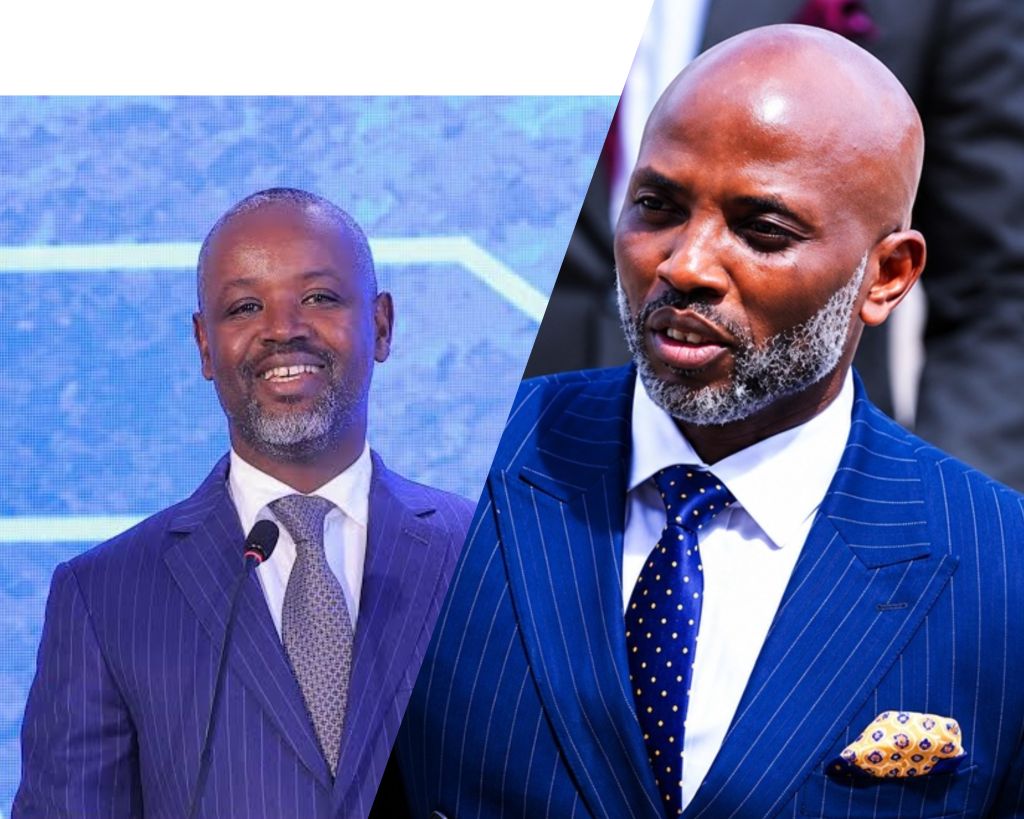
What began as a routine ministerial vetting quickly turned into one of the most dramatic sessions before Parliament’s Appointments Committee, ultimately ending with the rejection of Victoria University Vice Chancellor Dr. Lawrence Muganga’s nomination as Minister of State for Internal Affairs.
By the time Muganga walked into the committee room, much of the groundwork had already been laid.
Days earlier, Parliament had written to the Ministry of Internal Affairs seeking verification of the citizenship status of all ministerial nominees, a standard due diligence exercise that would prove decisive.
The report that landed before the committee identified four nominees with foreign citizenship links.
Foreign Affairs Minister-designate Adonia Ayebare, State Minister-designate Calvin Echodu and Sharsti Musherure were listed as having held dual Ugandan-American citizenship. Muganga’s case stood out.
According to sources familiar with the report, the ministry indicated that Muganga had citizenship ties to Uganda, Canada and Rwanda.
Unlike the other nominees, who had reportedly moved swiftly after their nominations to formally renounce their foreign citizenships and present evidence to the committee, Muganga arrived facing tougher questions.
Committee members wanted documentation. When the issue of his Canadian citizenship came up, Muganga reportedly told the committee he had already initiated the process of renouncing it.
Deputy Speaker Thomas Tayebwa, who was part of the vetting team, reportedly pressed him further.
“Do you have the evidence?” Tayebwa asked.
“I applied today online but I haven’t received a response yet,” Muganga replied, according to multiple sources briefed on the proceedings.
The response did not satisfy committee members. Several MPs argued that the committee could not rely on assurances alone, particularly given that the Internal Affairs docket oversees citizenship, immigration, passports and national identification.
Attention then shifted to Rwanda. Muganga reportedly told the committee that he had renounced his Rwandan citizenship years earlier.
Muganga worked in Rwanda’s Revenue Authority and other government bodies before relocating to Canada where he obtained Canadian citizenship.
Again, members asked for proof of renouncing citizenship. Again, none was produced.
According to lawmakers familiar with the discussions, it was at this point that concern within the committee deepened.
“The issue was not whether he said he had renounced the citizenships. The issue was whether he could demonstrate it,” one source said.
Committee members reportedly contrasted his case with those of other nominees who arrived with documentation showing they had formally commenced or completed renunciation processes.
By the end of the session, the majority of members were unconvinced that Muganga had sufficiently addressed the citizenship concerns raised in the Internal Affairs verification report.
The committee subsequently decided not to approve his nomination and instead referred the matter back to President Museveni for further consideration.
Deputy Speaker Tayebwa later confirmed that while the committee had approved 80 of the 82 ministerial nominees, one nominee had raised issues requiring communication to the appointing authority.
“We have approved 80 out of the 82 ministerial nominees. One is still pending because he has not yet appeared before the committee, and another one we found issues, which we are going to communicate to the appointing authority to look into,” Tayebwa told journalists.
The controversy has since exploded into a national debate. In a strongly worded response, Muganga accused the committee of unfairly targeting him and alleged that the outcome had been predetermined.
“This rejection was decided before the process even began. It was never about passports, qualifications, or integrity. It was personal. It was calculated. It was discriminatory,” Muganga said.
He further alleged that he had been subjected to hostility because of his Rwandan heritage.
“What I experienced in that committee was not parliamentary oversight. It was hatred. It was discrimination. It was racism directed at me simply because I am a Munyarwanda,” he said.
Muganga insisted that Banyarwanda are Ugandan citizens entitled to equal treatment under the law and questioned whether ethnicity had influenced the outcome of the vetting.
Kabanda speaks out.
However, committee members and government officials have rejected that narrative.
Sources close to the process insist Tayebwa’s questions were based entirely on information supplied by the Ministry of Internal Affairs and the legal requirements surrounding citizenship.
MP David Kabanda was among the first lawmakers to publicly push back against Muganga’s claims.
“Mr. Muganga Lawrence was not rejected by the committee for being a Munyarwanda, a narrative I see some people so deceptively selling,” Kabanda said.
“We have other leaders who are Banyarwanda who were approved and have been approved in the past. Hon. Aisha Ssekindi and Diana Mutasingwa were approved yet they are Banyarwanda but Ugandan citizens.”
Kabanda said the committee’s concerns centred on citizenship documentation rather than ethnicity.
“Muganga was not approved after he denied holding a Rwandan passport, but the committee investigations confirmed he holds three passports: Ugandan, Canadian and Rwandan. Why was he denying it?” Kabanda asked.
“Therefore, the claim that he was rejected because of being a Munyarwanda is totally false, misleading and dangerous.”
The decision has reignited a wider national debate over dual citizenship, eligibility for public office and whether Uganda’s citizenship laws are being applied consistently.
For now, the final decision rests with President Museveni, who must determine whether to stand by the nomination, replace it or seek further clarification.
Inside Parliament, many members say the issue was straightforward: when the committee asked for proof, it expected documents, not promises.